Poqolorex
Drift Collection
Drift Collection
Couldn't load pickup availability
1. Problem Statement
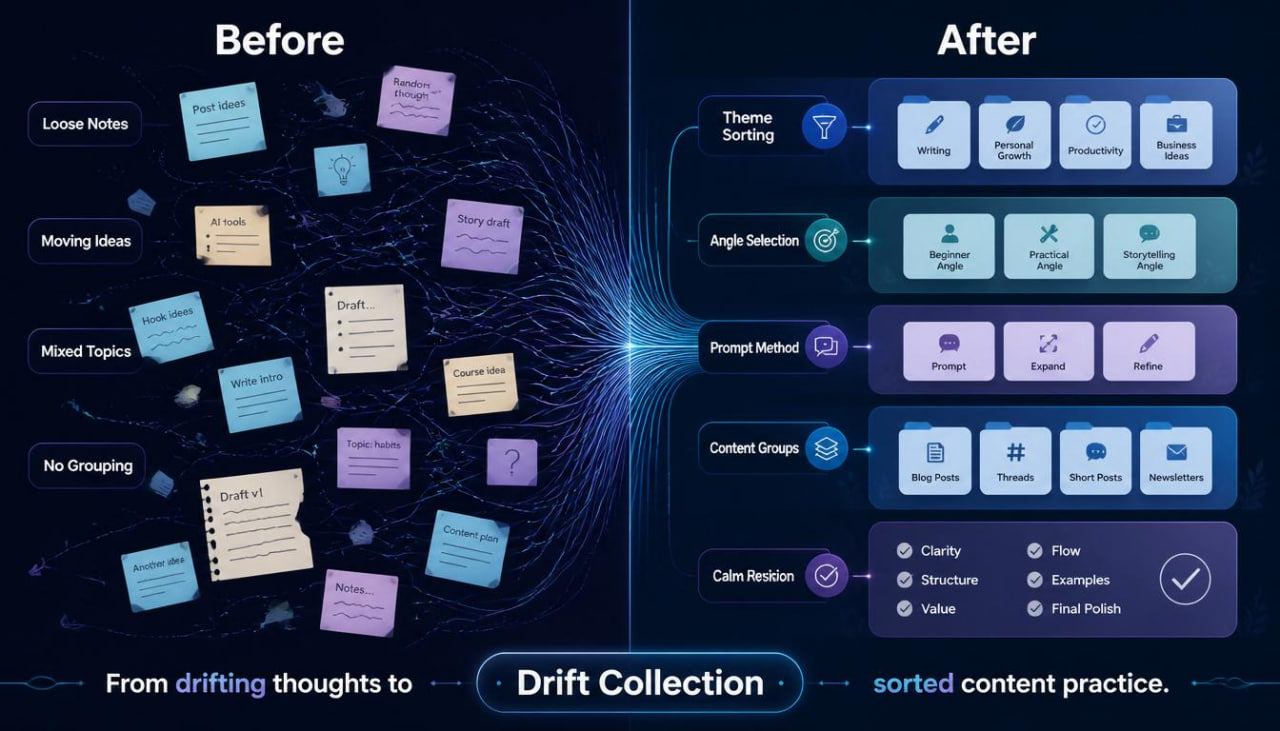
Many learners do not lack ideas; they often have too many of them moving in different directions. One note may become a course topic, another may work as a short educational section, and another may need more research, shaping, or context before it can be used. When these ideas drift without structure, content creation can feel messy and difficult to manage. AI can support the process, but only when the learner knows how to sort ideas, define purpose, and give thoughtful instructions. Drift Collection was created for learners who want a more organized way to gather, group, and guide creative material before turning it into written content.
2. Course Response
Drift Collection teaches learners how to work with moving ideas instead of forcing every thought into one fixed format too early. The course introduces methods for collecting raw notes, sorting them into themes, choosing useful content angles, and creating prompts that fit each idea type. Learners practice working with drafts in stages: first gathering, then grouping, then outlining, then writing, then reviewing. This creates a calmer creative process where ideas can be explored without losing structure. The course focuses on AI-assisted planning, human review, and practical writing habits for course pages, educational materials, and content blocks.
3. What’s Inside
Drift Collection includes a detailed set of materials for organizing ideas and turning them into structured AI-assisted content.
The first material is the Idea Drift Board. This worksheet gives learners a place to collect loose notes, phrases, topics, audience questions, draft titles, and unfinished thoughts. Instead of judging each idea right away, learners learn how to place everything into one organized space before deciding what belongs where.
The second material is the Theme Sorting Grid. This guide helps learners group ideas into categories such as content planning, writing support, tone design, lesson structure, creative prompts, audience questions, and page copy. This makes it easier to see patterns inside a large set of notes.
The course also includes the Angle Selection Sheet. This material helps learners decide how each idea should be shaped. A topic may become a short explanation, a guided exercise, a course section, a FAQ answer, a headline group, a reflective note, or a planning checklist. The sheet helps learners choose the format before drafting begins.
Another part of Drift Collection is the Prompt Drift Method. This guide teaches learners how to move from a loose thought to a complete AI request. It begins with a short idea, then adds audience context, tone direction, content format, section order, and review notes. Learners can see how each added detail changes the quality and usefulness of the draft.
The course includes the Content Grouping Map. This worksheet helps learners connect related ideas into small content clusters. For example, several notes about tone, structure, and prompting can become one course module or one page section. This method supports better organization across related materials.
Drift Collection also includes the Draft Direction Cards. These cards provide prompt patterns for different writing needs, including topic expansion, outline creation, paragraph drafting, tone adjustment, short description writing, FAQ building, and review. Each card includes a reminder to keep the content grounded, clear, and suitable for educational pages.
The next material is the Calm Revision Checklist. This checklist helps learners review AI-assisted writing after a first draft. It asks whether the idea is still clear, whether the section order makes sense, whether the tone matches the intended reader, whether any wording feels exaggerated, and whether the draft needs more human editing.
Another section is the Content Drift Journal. This reflection page helps learners track how an idea changed during the writing process. Learners can note the original idea, the selected angle, the prompt used, the draft result, and the edits made afterward. This helps build a habit of thoughtful review.
The course also includes the Course Page Structure Guide. This guide helps learners shape materials for course-related pages. It includes neutral wording patterns for course introductions, collection descriptions, FAQ answers, benefit sections, and contact blocks. The language stays focused on learning, structure, and skill development.
Drift Collection provides the Idea Resting Folder as well. This material helps learners place unfinished ideas into categories for later review. Not every idea needs to become content right away. Some ideas need more examples, more context, or a different format. This folder helps learners keep them organized instead of losing them.
The course also includes the Rewrite Path Sheet. This worksheet helps learners improve drafts that feel unclear, too broad, or too plain. It includes directions for asking AI to simplify, expand, reorganize, soften tone, add examples, or adjust the section order.
Finally, Drift Collection includes Practice Materials. Learners collect ten raw ideas, sort them into themes, choose three content angles, write prompt drafts, review the outputs, and revise one final piece using the Calm Revision Checklist. Each practice task is designed to support steady learning through direct content work.
4. Who Is This For?
Drift Collection is for learners who often collect ideas but need a better way to organize and shape them. It is useful for creators, writers, educators, course builders, and small creative teams working on AI-assisted content materials.
This course fits learners who feel that their notes, prompts, and drafts are spread across too many directions. It supports a more organized approach to idea storage, content grouping, and prompt planning.
Drift Collection is also suitable for learners who prefer a flexible creative process. The materials allow ideas to move, shift, and develop while still giving the learner a clear method for sorting and reviewing them.
5. What You’ll Learn
- How to collect raw ideas without losing structure
- How to sort notes into content themes
- How to choose a useful format for each idea
- How to turn loose thoughts into detailed AI requests
- How to group related ideas into course materials
- How to create prompt patterns for different writing tasks
- How to review AI-assisted drafts with careful editing questions
- How to store unfinished ideas for later development
- How to revise drafts that feel unclear or too broad
- How to write course page sections with neutral wording
- How to use reflection notes after each content task
- How to build a calmer workflow for AI-assisted content creation
6. 30-Day Refund Note
Drift Collection is covered by the Poqolorex 30-day refund period for paid courses. Learners may request a refund within 30 days according to the store’s refund terms. This note keeps purchase terms clear while the course page stays focused on learning materials, organized practice, and thoughtful content development.
Self-paced learning overview
- 📁 Digital file available after purchase
- 🗂️ Long-term availability
- 🔐 Secure checkout
- 📝 Content updated in 2026
What is Poqolorex about?
What is Poqolorex about?
Poqolorex offers AI-focused courses, lessons, modules, materials, and resources for content creation. The materials are built for learners who want a structured way to explore ideas, prompts, planning, writing, and creative organization.
Do I need prior AI knowledge?
Do I need prior AI knowledge?
No prior AI background is required. The courses are written with clear guidance, practical examples, and learning steps that help you understand each topic at a comfortable pace.
Are the materials tied to specific apps or programs?
Are the materials tied to specific apps or programs?
No. Poqolorex keeps the learning focused on content thinking, AI-supported workflows, idea development, and creative structure without naming specific apps, programs, services, or operating systems.
Share