Poqolorex
Axis Guide
Axis Guide
Couldn't load pickup availability
1. Problem Statement
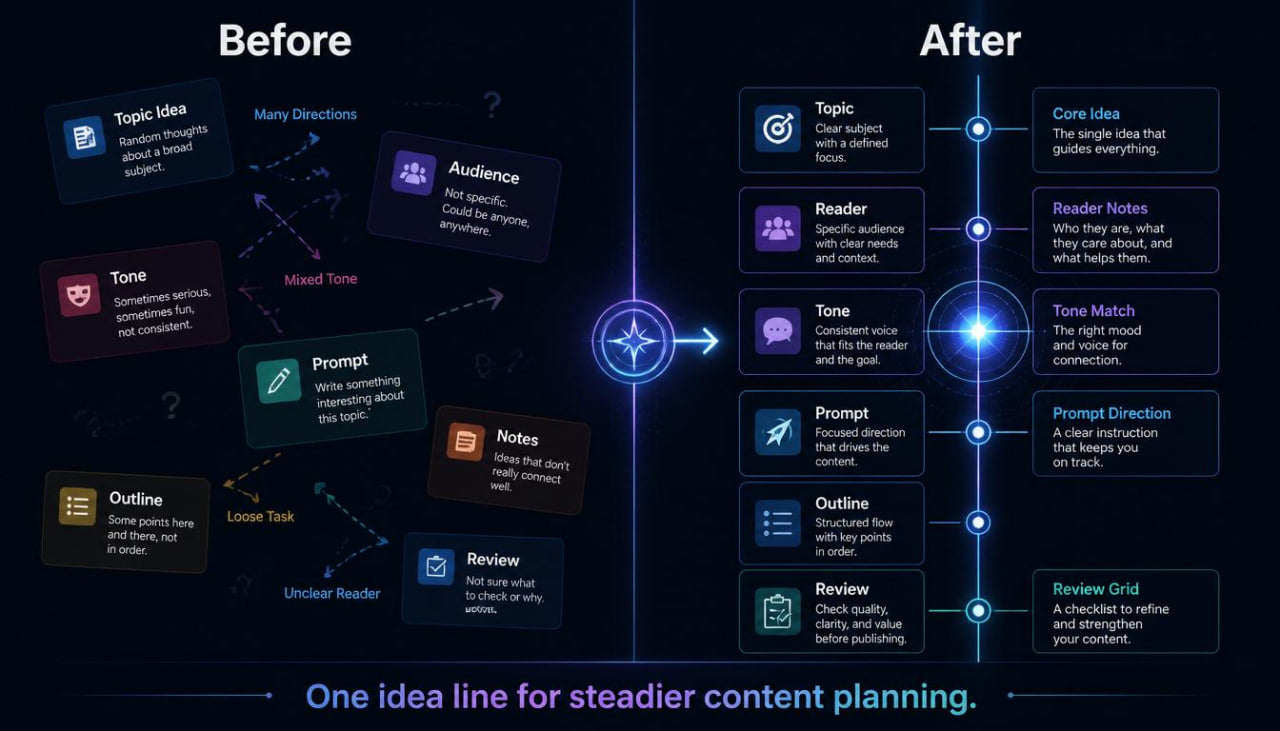
Many learners begin content work with a topic, but not with a clear direction. They may know what they want to talk about, yet the message can become scattered once they start writing, prompting, outlining, or reviewing AI-assisted drafts. Without a central idea, content may feel uneven: one part sounds educational, another feels promotional, and another moves away from the original point. This can make the creative process tiring because each new draft requires more correction than expected. Axis Guide responds to this challenge by helping learners create a steady creative line before asking AI to support the writing process.
2. Course Response
Axis Guide introduces a structured way to define the “axis” of a content piece: the core idea that keeps the message aligned from beginning to end. Learners work through exercises that clarify topic, audience, tone, purpose, structure, and revision notes before drafting begins. The course shows how to write AI prompts that carry enough context to produce more useful starting material. It also explains how to compare several content directions and choose the one that fits the intended message. Instead of focusing on bold claims, Axis Guide focuses on organized thinking, practical writing habits, and repeatable content planning steps.
3. What’s Inside
Axis Guide includes a fuller set of course materials than Free Kit, with more focus on planning, structure, and guided revision.
The first part is the Core Idea Map. This worksheet helps learners define the main point of a content piece in one clear sentence. It includes prompts for topic, audience, reason, tone, and intended reader takeaway. The goal is to help the learner identify what the content should be about before creating longer text.
The second part is the Content Axis Framework. This material teaches learners how to connect the main idea with supporting sections. It shows how to build a content line that moves from opening thought to explanation, example, and closing note. This helps reduce scattered writing and gives each section a clear role.
The third part is the Prompt Direction Sheet. This sheet helps learners write stronger AI requests by including context, role, audience, tone, format, length, and revision instructions. It also includes examples of weak prompts and improved versions, so learners can see how small changes affect the final draft.
The course also includes a Tone Alignment Guide. This guide helps learners choose language that fits the content purpose. It covers calm educational tone, warm brand tone, concise instructional tone, reflective storytelling tone, and structured course-description tone. Each tone includes sample phrases and notes on when it may be useful.
Another section is the Angle Finder Exercise. This exercise helps learners take one topic and explore several content angles, such as beginner explanation, comparison, checklist, story-based introduction, common mistake breakdown, and guided practice format. The exercise supports creative variety without relying on exaggerated claims or pressure language.
Axis Guide also includes the Draft Review Grid. This grid helps learners review AI-assisted content by checking whether the text follows the original axis, stays consistent in tone, avoids overstatement, includes clear examples, and keeps the reader’s needs in mind. It encourages thoughtful editing rather than using AI output without revision.
The next material is the Section Builder Template. This template gives learners a structure for building course descriptions, article sections, landing page blocks, email-style updates, and educational notes. It includes fields for headline, short intro, key idea, supporting detail, learner benefit, and closing direction.
The course also contains Practice Prompts for Content Planning. These prompts are designed for brainstorming, outlining, rewriting, expanding short ideas, simplifying dense text, and creating structured content blocks. Each prompt is paired with a short explanation so learners understand how the wording guides the result.
Finally, Axis Guide includes a Reflection Page. This page helps learners document what worked, what felt unclear, and what adjustments they want to make in future content planning. It turns each writing session into a learning moment and helps the learner build a more organized creative routine.
4. Who Is This For?
Axis Guide is for learners who already understand the basics of AI-assisted content creation but want more structure before writing. It fits people who often have good ideas but need help turning those ideas into a clearer content direction.
This plan is useful for creators, small education brands, writers, content planners, digital learning teams, and independent course builders. It is also suitable for learners who want to prepare stronger prompts, create cleaner outlines, and review AI-assisted writing with more care.
Axis Guide may be especially helpful for people who feel their drafts often lose focus. The materials guide learners to define the central idea first, then build around it with supporting points, examples, and revision notes.
This course is not about dramatic outcomes or inflated claims. It is about building a practical foundation for thoughtful AI-supported content planning.
5. What You’ll Learn
- How to define the central idea of a content piece
- How to connect a topic with audience needs and tone
- How to write prompts with clearer context and direction
- How to create several content angles from one topic
- How to organize sections around one main message
- How to review AI-assisted drafts for tone and clarity
- How to reduce scattered writing through planning templates
- How to create structured course, article, and landing page sections
- How to use examples without overloading the message
- How to edit AI-assisted text so it fits your intended voice
- How to create a repeatable planning routine for content work
- How to avoid exaggerated wording in educational copy
6. 30-Day Refund Note
Axis Guide is covered by the Poqolorex 30-day refund period for paid courses. Learners may request a payment return within 30 days according to the store’s refund terms. The policy is written to keep the purchase process clear and fair while avoiding exaggerated claims about outcomes.
Self-paced learning overview
- 📁 Digital file available after purchase
- 🗂️ Long-term availability
- 🔐 Secure checkout
- 📝 Content updated in 2026
What is Poqolorex about?
What is Poqolorex about?
Poqolorex offers AI-focused courses, lessons, modules, materials, and resources for content creation. The materials are built for learners who want a structured way to explore ideas, prompts, planning, writing, and creative organization.
Do I need prior AI knowledge?
Do I need prior AI knowledge?
No prior AI background is required. The courses are written with clear guidance, practical examples, and learning steps that help you understand each topic at a comfortable pace.
Are the materials tied to specific apps or programs?
Are the materials tied to specific apps or programs?
No. Poqolorex keeps the learning focused on content thinking, AI-supported workflows, idea development, and creative structure without naming specific apps, programs, services, or operating systems.
Share